Season by season
Polar night (October–February). Six months without the sun and temperatures of minus 30°C and below. No tourism of any kind.
Spring (March–April). The sun returns at the equinox. April, with continuous daylight, hard-frozen ice and temperatures around minus 20 to minus 30°C, is the window for ice camps and ski expeditions.
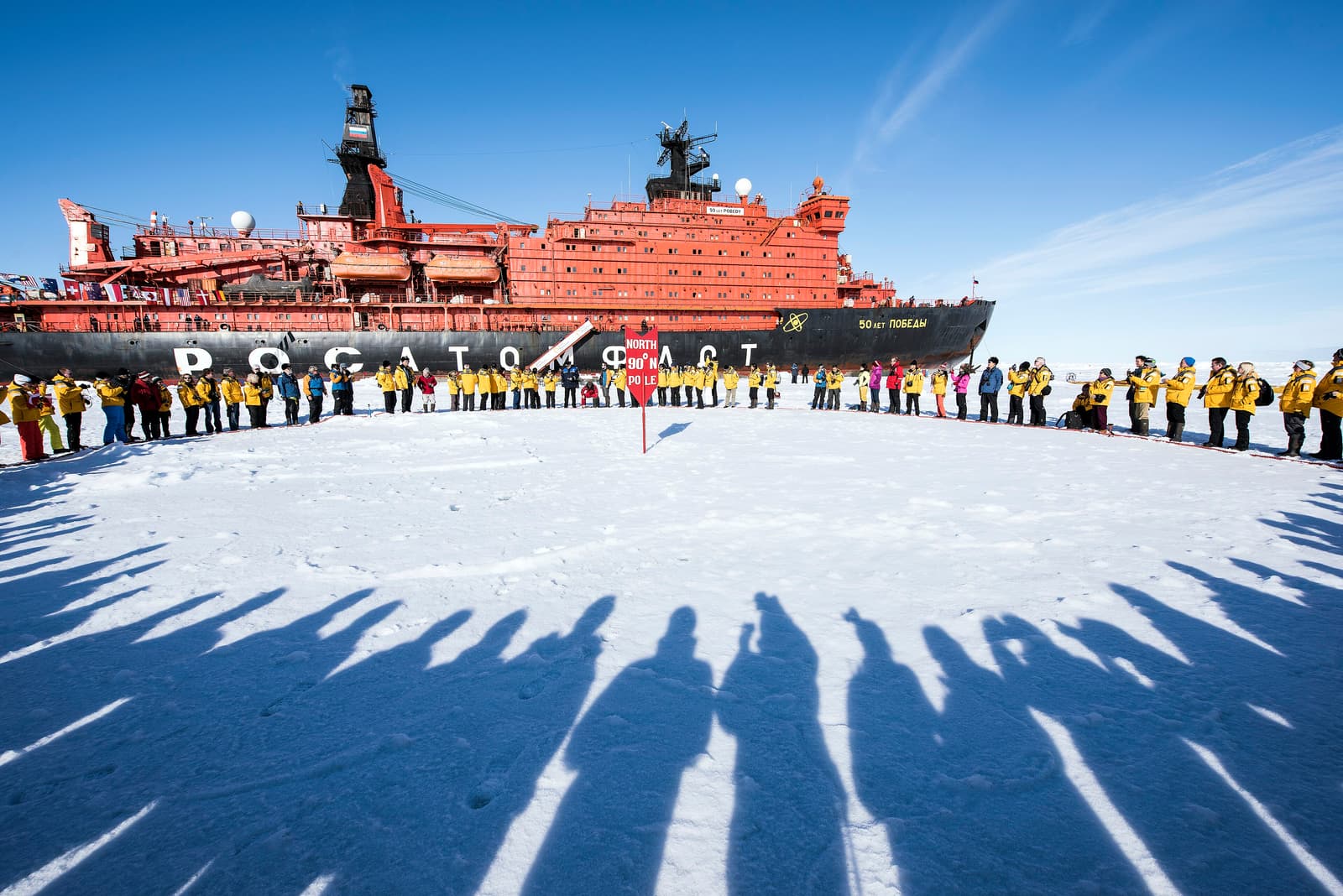
Early summer (May–June). The ice becomes too soft and broken for aircraft and is still at its thickest for ships. The first icebreaker voyages leave in June.
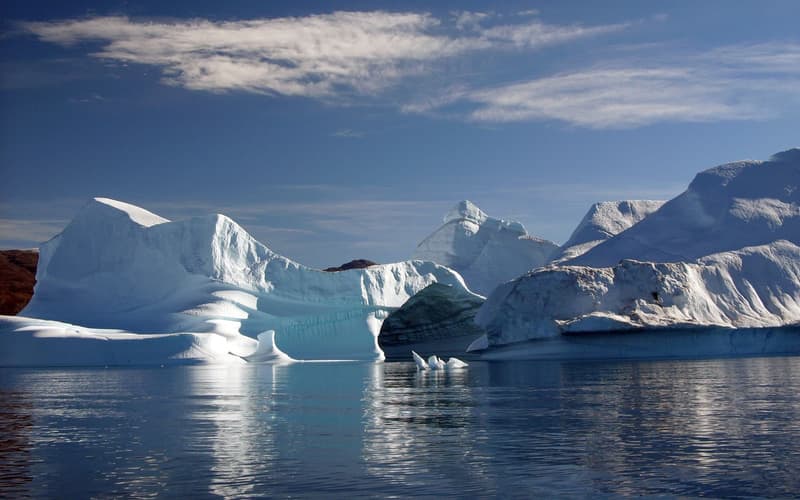
High summer (July–September). The season for ships: temperatures near 0°C, melt ponds on the floes, fog banks and midnight sun until the September equinox.
Month-by-month
| Month | Avg. high | Avg. low | Crowds |
|---|---|---|---|
| January | -29°C / -20°F | -35°C / -31°F | Quiet |
| February | -30°C / -22°F | -36°C / -33°F | Quiet |
| March | -28°C / -18°F | -34°C / -29°F | Quiet |
| April | -20°C / -4°F | -26°C / -15°F | Busy |
| May | -9°C / 16°F | -13°C / 9°F | Quiet |
| June | -1°C / 30°F | -3°C / 27°F | Moderate |
| July | 1°C / 34°F | -1°C / 30°F | Peak |
| August | 0°C / 32°F | -2°C / 28°F | Busy |
| September | -7°C / 19°F | -11°C / 12°F | Quiet |
| October | -17°C / 1°F | -22°C / -8°F | Quiet |
| November | -24°C / -11°F | -30°C / -22°F | Quiet |
| December | -27°C / -17°F | -33°C / -27°F | Quiet |
Figures for: The central Arctic Ocean near the Pole (estimates — there is no permanent weather station). Temperatures are rounded long-term averages for the place named above; real days vary widely, and wind makes it feel much colder. Crowd levels are our own estimate.
Events & festivals
- Around 20 March: Sunrise at the Pole — the only one of the year
- April: Traditional ice-camp season and the North Pole Marathon, when the camp operates
- June–September: Icebreaker voyages
- Around 21 June: The sun at its highest, about 23.5° above the horizon all day
- Around 23 September: Sunset, followed by weeks of twilight