Arctic wildlife is not abundant in the way of a tropical reef or an African plain. Animals are spread thinly over enormous areas and concentrate, briefly, where there is food: at the ice edge, under seabird cliffs, in fjords full of herring. Seeing them takes time, patience and often a boat — and no honest operator will promise a sighting.
They are also living close to their limits. Disturbance that makes a bear run, a walrus herd stampede or a bird leave its egg costs energy that may not be recovered. That is why distance rules have tightened in recent years, notably in Svalbard, and why the manner of watching matters as much as the place.
What to see, where and when
| Animal | Best places | Best time | How |
|---|---|---|---|
| Polar bear | Svalbard’s north and east coasts and the pack-ice edge; Churchill on Hudson Bay; occasionally East Greenland and the Canadian Arctic | June–August in Svalbard; October–November at Churchill | Expedition cruise; tundra vehicle at Churchill |
| Walrus | Svalbard haul-outs; Franz Josef Land; Chukchi Sea coasts | June–September | Boat trips and cruise landings, at a distance |
| Humpback whale and orca | Fjords of northern Troms and western Finnmark; Skjálfandi Bay and Eyjafjörður in Iceland; Disko Bay | November–January in Norway; April–October in Iceland; June–September in Greenland | Whale-watching boats |
| Beluga, narwhal and bowhead | Floe edge off north Baffin Island; Churchill River (belugas); Disko Bay (bowheads in spring); Svalbard fjords | May–June at the floe edge; July–August at Churchill | Outfitter camps; boat and kayak tours |
| Seals | Throughout: ringed and bearded seals on ice, harbour seals on coasts | All year | Any boat trip |
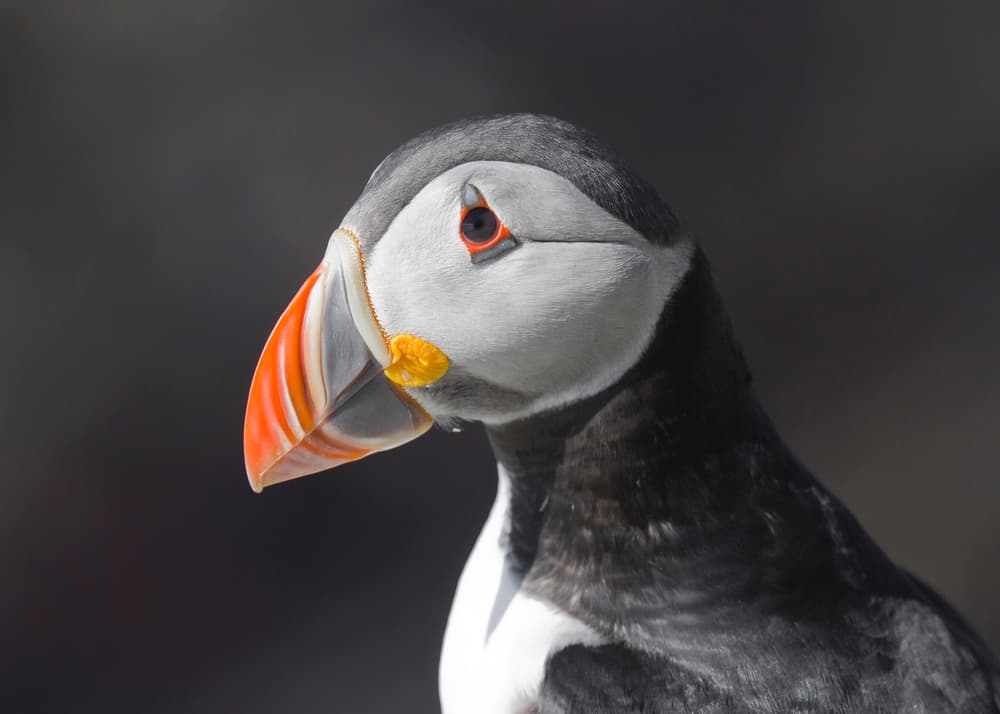
| Puffins and other seabirds | Hornøya and Gjesværstappan in Norway; Grímsey and Lundey in Iceland; Svalbard’s bird cliffs | May–early August | Short boat trips; cliff-top paths |
| Reindeer and caribou | Svalbard’s valleys; Finnmark’s coast in summer; Alaska’s North Slope and the Dempster in autumn | All year in Svalbard; summer and autumn elsewhere | From roads and on guided walks |
| Musk ox | Jameson Land in East Greenland; Kangerlussuaq; Alaska’s Dalton Highway; Wrangel Island | Summer and early autumn | Cruise landings; roadside viewing |
| Arctic fox | Svalbard, Iceland’s north-west, Greenland, the whole tundra | All year; white in winter, brown in summer | By chance, often near bird cliffs |
No sighting is ever guaranteed. Seasons shift with ice and food from year to year.
Responsible viewing: the rules that matter
- Keep your distance. In Svalbard the law requires at least 300 metres from polar bears, and 500 metres from 1 March to 30 June. If an animal changes its behaviour because of you, you are too close, whatever the rule says.
- Never pursue, surround or cut off. Let whales, bears and walrus choose whether to approach. Boats should travel slowly, parallel to whales rather than towards them, and limit their time with any one group.
- Stay quiet and low at haul-outs and bird cliffs. A panicked walrus herd can crush its own calves; a frightened auk leaves its egg to the gulls. Keep to marked paths and viewing areas.
- Do not feed, touch or call to animals, and never leave food or rubbish where foxes, bears or birds can reach it.
- Leave drones at home unless you have explicit permission. They are banned in most protected areas and disturb birds and mammals badly.
- Clean your gear. Brush seeds and soil from boots, clothing and bags before every landing, and disinfect boots where asked — both to stop invasive species and to limit the spread of bird flu.
- Choose operators with a code of conduct and small groups, and ask how they handle wildlife encounters before you book. Avoid any trip that advertises guaranteed close approaches.
- Respect legal hunting. In Greenland, Canada and Alaska, Indigenous communities hunt seals, whales, caribou and some bears under quotas. Do not interfere with, obstruct or photograph hunts without permission.
Polar bears
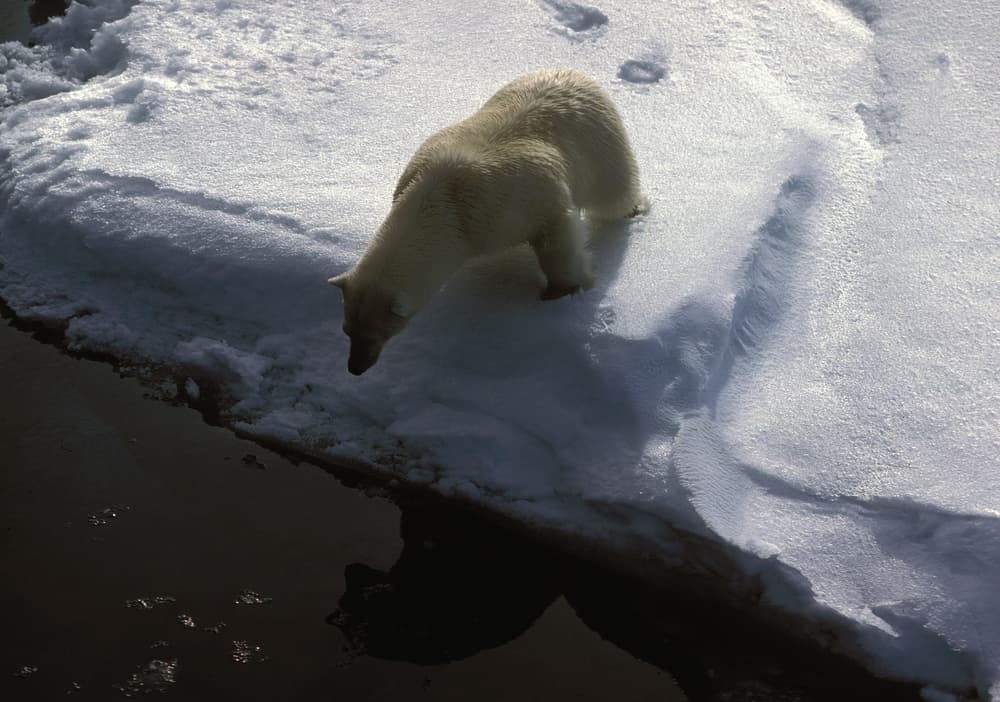
There are thought to be around 26,000 polar bears in the world, in nineteen populations around the Arctic. They hunt seals from the sea ice, so they are most often found where ice meets open water — in summer, along the pack edge and in fjords where glacier fronts hold ice. The population shared by Svalbard and Franz Josef Land numbers roughly 3,000.
The realistic ways to see one are a summer expedition cruise around Svalbard, where most voyages report sightings, usually at long range, and an autumn visit to Churchill in Arctic Canada, where bears wait on shore for Hudson Bay to freeze. From 2025 Svalbard’s rules keep ships and boats well back; bring binoculars and a long lens, and be content with a bear behaving naturally at a distance.
Walrus
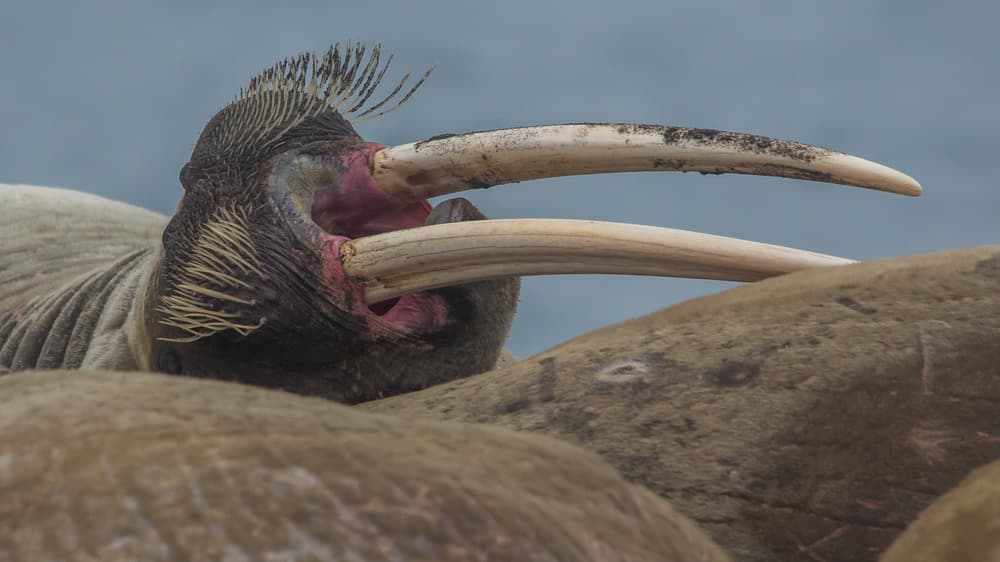
Hunted almost to extinction in Svalbard by the 1950s and protected since, walrus have recovered to several thousand there and now use dozens of beaches. Adults weigh a tonne or more and feed on clams on the shallow seabed. On land they lie in tightly packed groups that are easily alarmed. Visits are made on foot in small groups from downwind, stopping well short, or from boats that keep off and move slowly.
Whales
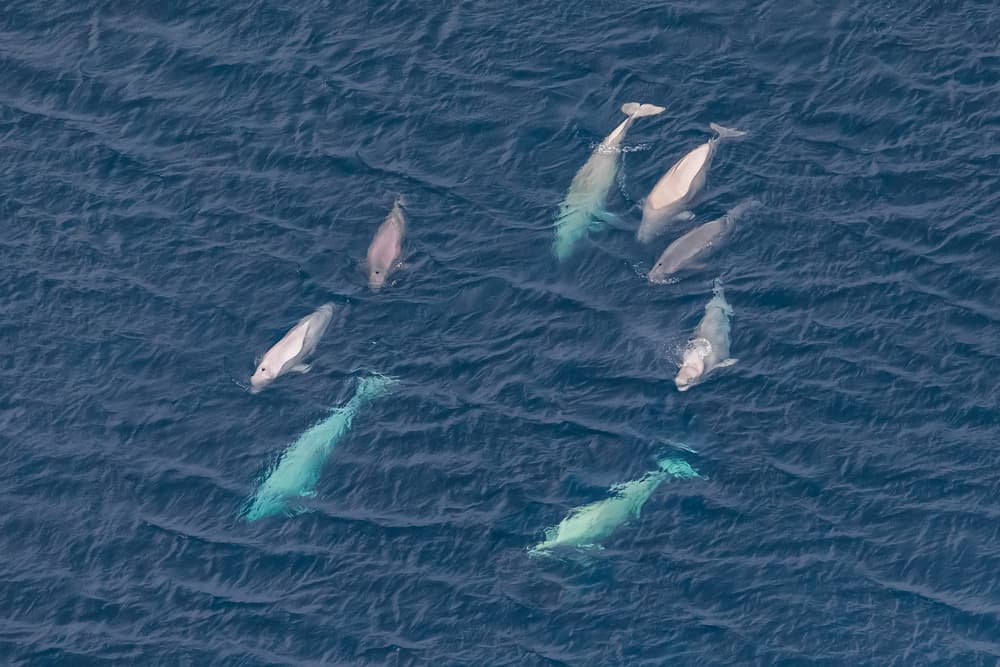
Three whales live in the Arctic all year: the bowhead, which can live for more than two centuries; the white beluga; and the narwhal, whose males carry a spiral tusk up to three metres long. Narwhals are shy and are seen mainly at the floe edge of Baffin Bay and in East Greenland’s fjords. In summer they are joined by humpback, minke, fin and blue whales feeding in the productive waters at the ice edge, and by orcas.
The most accessible whale watching is in North Iceland from spring to autumn and off northern Norway in early winter, when herring gather. Choose operators that follow whale-watching guidelines, keep engines quiet and do not crowd the animals. Swimming with orcas is offered in Norway and is controversial; rules have been tightened, so check the current regulations and the operator’s practice carefully.
Seabirds
The cliffs of the Arctic hold some of the largest bird colonies on Earth: millions of little auks and Brünnich’s guillemots in Svalbard and Greenland, kittiwakes, fulmars, and puffins further south. Arctic terns, which nest on beaches throughout the region, migrate to the Antarctic and back each year, the longest journey of any animal. Birds are present from about May to early August and then vanish to sea.
The easiest colonies to visit are Hornøya near Vardø, Gjesværstappan by North Cape and Grímsey in Iceland. Outbreaks of avian influenza have closed some sites temporarily in recent summers; follow local notices.
Land animals
The Svalbard reindeer, small, short-legged and unafraid, grazes right in Longyearbyen. On the mainland, semi-domesticated reindeer belong to Sami herders and move to the coast in summer; in North America their wild relatives, caribou, migrate in herds of tens of thousands. Musk oxen, survivors of the ice age, are native to Greenland and Canada and have been reintroduced in Alaska and elsewhere. Arctic foxes, Arctic hares, lemmings and snowy owls complete a short list. There are no penguins: they live only in the southern hemisphere.
Photography
With the new distance rules, a lens of 400 mm or more is useful for bears and walrus, and binoculars matter more than a camera for actually finding animals. Cold drains batteries quickly — carry spares inside your jacket — and moving between a warm cabin and cold air fogs lenses; keep the camera in its bag for a few minutes while it adjusts. Above all, do not let the picture set the distance.
Wildlife FAQs
Where am I most likely to see a polar bear?
On an expedition cruise of a week or more around Svalbard between June and August, or at Churchill, Manitoba, in late October and early November. Nowhere is certain.
Are there polar bears in Norway, Iceland or Tromsø?
Not on mainland Norway or, apart from very rare strays on drifting ice, in Iceland. Norway’s polar bears live in Svalbard, 900 km north of Tromsø.
How close can I get to wildlife?
Only as close as the law and the animal allow. In Svalbard that means at least 300 to 500 metres from polar bears. Elsewhere, follow your guide and back away if an animal reacts to you.
When can I see puffins?
From about May to early August, at colonies in northern Norway, Iceland and Svalbard. By mid-August they have left for the open sea.
Is whale watching harmful?
Done carelessly, it can be: noise and crowding disturb feeding and resting. Done under a code of conduct with limits on speed, distance and time, the impact is small, and it gives coastal communities a reason to value living whales.