Routes at a glance
| From | How | Time | Good to know |
|---|---|---|---|
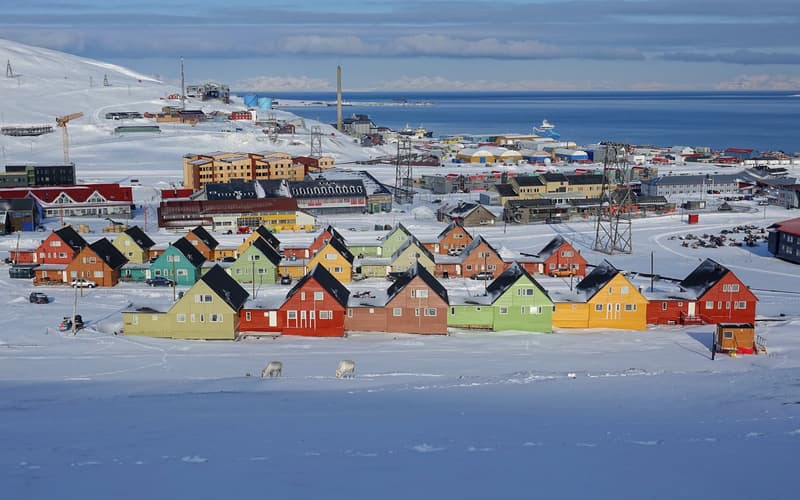
| Longyearbyen, Svalbard | Polar-class cruise ship | About 15–16 days round trip | Summer departures by a French operator; check the season’s programme |
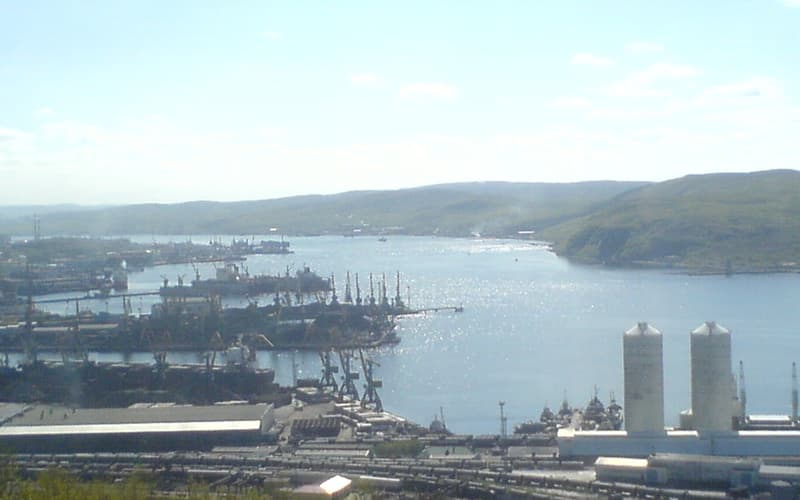
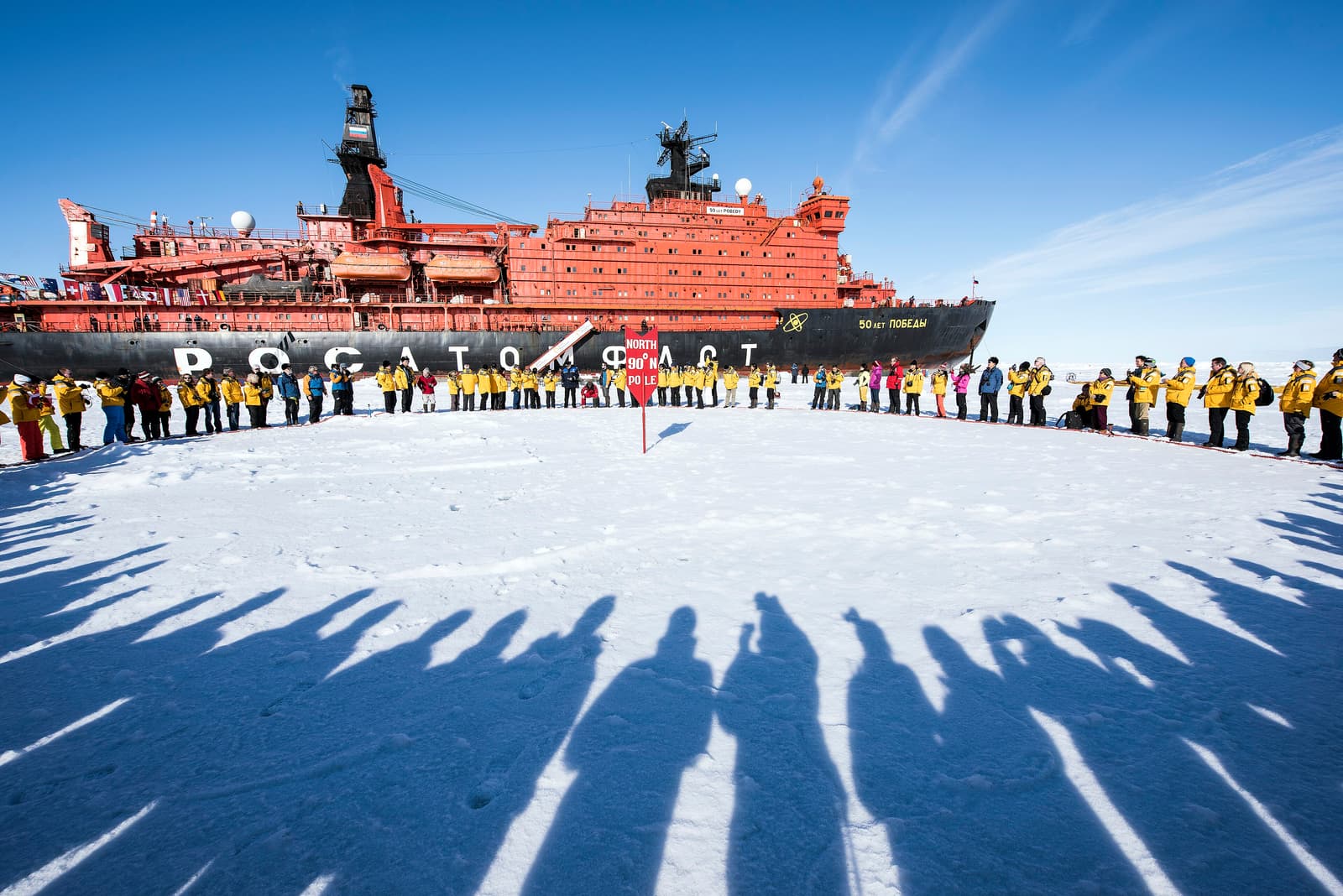
| Murmansk, Russia | Nuclear icebreaker | About 11–13 days round trip | June–August; see travel advice on Russia |
| Longyearbyen | Charter flight to an ice camp, then helicopter | 3–5 days | April only; has not run normally since 2018 |
| Ice camp at 89° north | Skiing the ‘last degree’ | 7–10 days on the ice | Guided; high fitness required |
| Oslo or Tromsø | Flight to Longyearbyen | 1 h 40 min–3 hours | The usual approach to the gateway |
By ship from Svalbard
Since 2021 a purpose-built French luxury expedition ship with a hybrid LNG-electric power plant and a high ice class has sailed to the geographic North Pole on several voyages each summer, mostly starting and ending in Longyearbyen. It is, at the time of writing, the principal option that does not involve travelling to Russia. Voyages last around two weeks, sell out far ahead and are priced at the very top of the cruise market.
By nuclear icebreaker from Murmansk
For three decades the classic North Pole voyage was aboard a Russian nuclear-powered icebreaker from Murmansk, and such sailings continue to be advertised. However, most Western expedition companies stopped selling them after February 2022, sanctions affect payments, flights and insurance, and many governments advise against all travel to Russia. We do not recommend booking these departures without taking current official advice; see our Russian Arctic page.
Fly-in expeditions
The April ice camp depended on Russian aircraft and crews operating through Norwegian territory. A dispute in 2019, then the pandemic and the war, stopped the seasons from Svalbard. Organisers have announced attempts to run the camp by other routes; whether a given season happens is often unclear until weeks beforehand. Treat deposits with caution and insist on clear refund terms.
Getting around locally
- On the ice you move only with the expedition team: on foot within a perimeter watched by bear guards, by Zodiac in open leads, or by helicopter where available.
- Ships provide rubber boots and a parka; you bring everything else.
- There is no mobile signal. Satellite internet on board is slow, costly or both, and may not work at the highest latitudes.
- Time zones are meaningless at the Pole. Ships keep the time of their home port.