There is no single way into the Arctic. Each region has its own southern hub — Oslo for Arctic Norway and Svalbard, Reykjavík for North Iceland and East Greenland, Copenhagen and Reykjavík for West Greenland, Ottawa, Yellowknife and Winnipeg for Arctic Canada, Anchorage and Fairbanks for Alaska — and there are almost no flights between the regions themselves. To go from Svalbard to Greenland, for example, you fly south to a capital and north again.
Within each region you move by small aircraft, coastal ship, expedition vessel or, in a few places, by road. All of them are slower and less reliable than you are used to: fog, wind and ice cancel services every week of the year. Build that into the plan from the start.
Gateway airports
| Airport | Gateway for | Typical connections | Good to know |
|---|---|---|---|
| Oslo (OSL) | Tromsø, Alta, Kirkenes, Svalbard | Direct flights to all four, several a day to Tromsø | The main hub for the Norwegian Arctic |
| Tromsø (TOS) | Tromsø, Svalbard, Finnmark | Longyearbyen 1 h 40 min; short hops to Alta, Hammerfest, Honningsvåg, Kirkenes | Seasonal direct flights from several European cities |
| Longyearbyen (LYR) | Svalbard, North Pole voyages | Oslo about 3 h; Tromsø 1 h 40 min | Outside Schengen: carry a passport |
| Keflavík (KEF) and Reykjavík City (RKV) | North Iceland, Greenland | Akureyri 45 min from RKV; Nuuk, Ilulissat and Kulusuk from Iceland | International and domestic flights use different airports |
| Copenhagen (CPH) | West Greenland | Nuuk about 4.5–5 h | The year-round trunk route to Greenland |
| Nuuk (GOH) | West Greenland | Ilulissat about 1 h 20 min | International runway opened in November 2024 |
| Ottawa (YOW) | Nunavut | Iqaluit about 3 h | Onward turboprops to Baffin communities |
| Yellowknife (YZF) and Whitehorse (YXY) | Western Canadian Arctic | Inuvik 2–3 h with stops | Whitehorse is the start of the drive north |
| Winnipeg (YWG) | Churchill, Hudson Bay | Churchill about 2.5 h by air, 2 days by train | No road to Churchill |
| Anchorage (ANC) and Fairbanks (FAI) | Arctic Alaska | Utqiaġvik and Deadhorse 1.5–2 h | Fairbanks is the base for Dalton Highway tours |
Routes and frequencies change every season, especially to Greenland. Treat this table as a guide and check airline timetables before you commit.
Entry rules at a glance
Norway and Iceland are in the Schengen area: many nationalities may visit visa-free for up to 90 days in any 180, and the European Union’s new entry systems for visa-exempt travellers are being phased in — check what applies on your travel date. Svalbard needs no visa of its own but lies outside Schengen, so you pass a passport check and must be allowed back into Norway afterwards. Greenland is outside Schengen and the European Union; visitors who need a visa for Denmark need one marked valid for Greenland.
Canada requires an electronic travel authorisation from most visa-exempt air travellers, and the United States an approved ESTA or a visa. For Russia, see our Russian Arctic page: most Western governments currently advise against travel. Rules change — confirm with official sources, and remember that expedition cruises often begin in one country and end in another.
Flying within the Arctic
Northern Norway has a dense network of small airports served by propeller aircraft that hop from town to town; fares are reasonable if booked ahead. Greenland’s domestic flights and helicopters are the only alternative to the weekly ferry and are expensive. In northern Canada and Alaska, regional airlines fly jets to hub communities and small planes beyond, at high fares and with strict baggage limits.
Wherever you are, the last flight of the day is the one most likely to be cancelled, and a cancellation may mean waiting a day or more for a free seat. Morning flights and a buffer night at the hub on the way home are cheap insurance.
Coastal ships and ferries
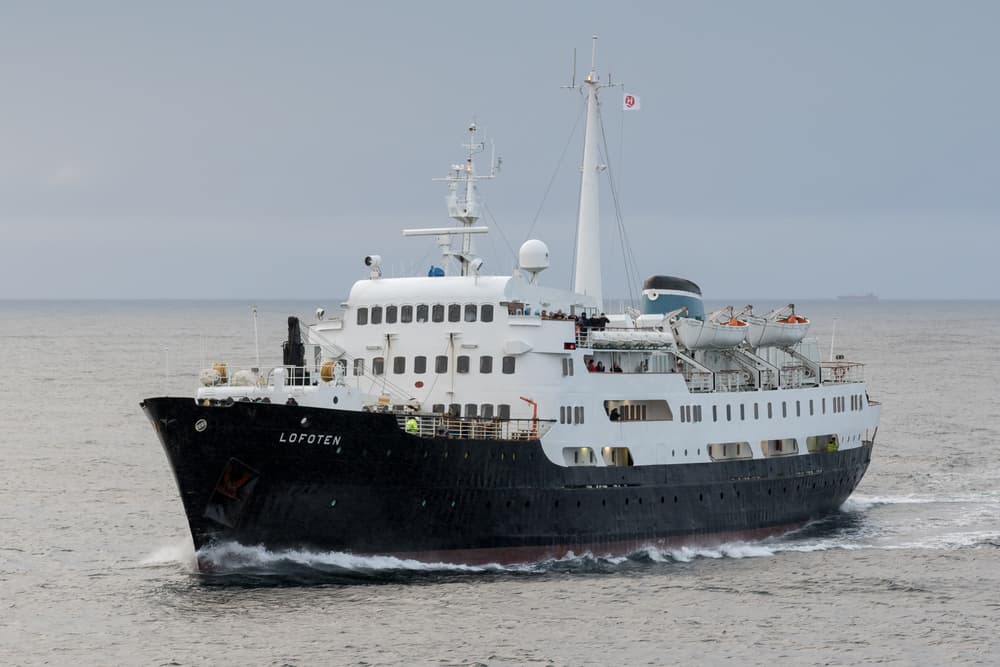
The Norwegian coastal route runs daily between Bergen and Kirkenes, calling at Tromsø, Hammerfest, Honningsvåg, Vardø and Kirkenes; you can sail any stretch. In Greenland, the Sarfaq Ittuk ferry links the west-coast towns once a week as far north as Ilulissat. Iceland’s only Arctic ferry sails from Dalvík to Grímsey. There are no passenger ferries to Svalbard, across the Arctic Ocean or along the coasts of Canada and Alaska.
Expedition-cruise ports
Most Arctic expedition voyages start or end in one of a handful of ports: Longyearbyen for Svalbard and the North Pole; Tromsø for some Svalbard sailings; Reykjavík, Akureyri and Ísafjörður for East Greenland; Kangerlussuaq and Nuuk for West Greenland and the Northwest Passage; and Nome or Cambridge Bay at the Passage’s western end. Operators usually sell charter flights to the more awkward ports as part of the package. Arrive at least a day early: ships do not wait.
The roads to the ocean
In Europe you can drive on paved roads all the way to North Cape and to the Barents shore at Grense Jakobselv and Vardø. In North America two gravel highways reach the Arctic coast: the Dempster and its extension to Tuktoyaktuk on the Beaufort Sea, and the Dalton Highway to Deadhorse in Alaska, where the final kilometres to the shore are by shuttle only. Both need a suitable vehicle, spare tyres and an unhurried schedule. Iceland’s Ring Road is paved to Akureyri.
Trains
Railways stop well short of the ocean almost everywhere. In Norway the line ends at Bodø, with a branch from Sweden to Narvik, four hours by bus from Tromsø. In Canada a slow, twice-weekly train runs from Winnipeg to Churchill on Hudson Bay. The Alaska Railroad reaches Fairbanks. None of these is fast, but each is a fine journey in its own right.
Weather, delays and buffer days
Plan one spare day for every long northern leg and two before an intercontinental flight home from Greenland or northern Canada. Book flexible or refundable fares where the difference is small, keep hotel bookings cancellable, and carry essentials — medication, warm layer, chargers — in hand luggage in case bags are delayed. Travel insurance should cover delay, missed departure and, for remote areas, medical evacuation.
Typical journey times
Scheduled times in normal conditions, to help you judge what fits into a trip.
| Route | How | Time | Good to know |
|---|---|---|---|
| Oslo – Tromsø | Flight | 1 h 50 min | Many daily |
| Tromsø – Longyearbyen | Flight | 1 h 40 min | Passport check |
| Oslo – Longyearbyen | Flight | About 3 h | Some via Tromsø |
| Tromsø – Honningsvåg | Coastal ship / flight | 18 h / 1.5 h | Ship calls at Hammerfest |
| Honningsvåg – Kirkenes | Coastal ship | About 1.5 days | Along the Barents coast |
| Tromsø – Alta | Road | About 6 h | Flights take 40 minutes |
| Reykjavík – Akureyri | Flight / road | 45 min / 5 h | From the city airport |
| Copenhagen – Nuuk | Flight | 4.5–5 h | Year-round |
| Nuuk – Ilulissat | Flight / ferry | 1 h 20 min / about 2 days | Ferry weekly |
| Iceland – Kulusuk | Flight | About 2 h | Mainly summer |
| Ottawa – Iqaluit | Flight | About 3 h | Daily |
| Dawson City – Inuvik – Tuktoyaktuk | Gravel road | 2–3 days | 878 km in all |
| Fairbanks – Deadhorse | Gravel road | 2 days | About 800 km |
| Anchorage – Utqiaġvik | Flight | About 2 h | No road |
| Longyearbyen – North Pole | Icebreaking cruise ship | About a week each way | Summer only |
Transport FAQs
Can I travel between Arctic regions without going south?
Rarely. Apart from flights between Iceland and Greenland and a few expedition cruises, each region connects only to its own southern hub.
Do I need a car?
Not in Tromsø, Longyearbyen, Ilulissat or any fly-in community, where tours include transport. A car is useful in North Iceland, around Alta, on the Varanger coast and, obviously, on the Dempster and Dalton highways.
Is there a ferry to Svalbard?
No. You fly to Longyearbyen or arrive on an expedition or cruise ship.
How do I get to Greenland?
By air from Copenhagen or Iceland to Nuuk, and in season from Iceland directly to Ilulissat and Kulusuk. See West Greenland and East Greenland.
What happens if my flight is cancelled by weather?
The airline rebooks you on the next available flight, which can be a day or more later; accommodation is not always provided. This is why buffer days and insurance matter.